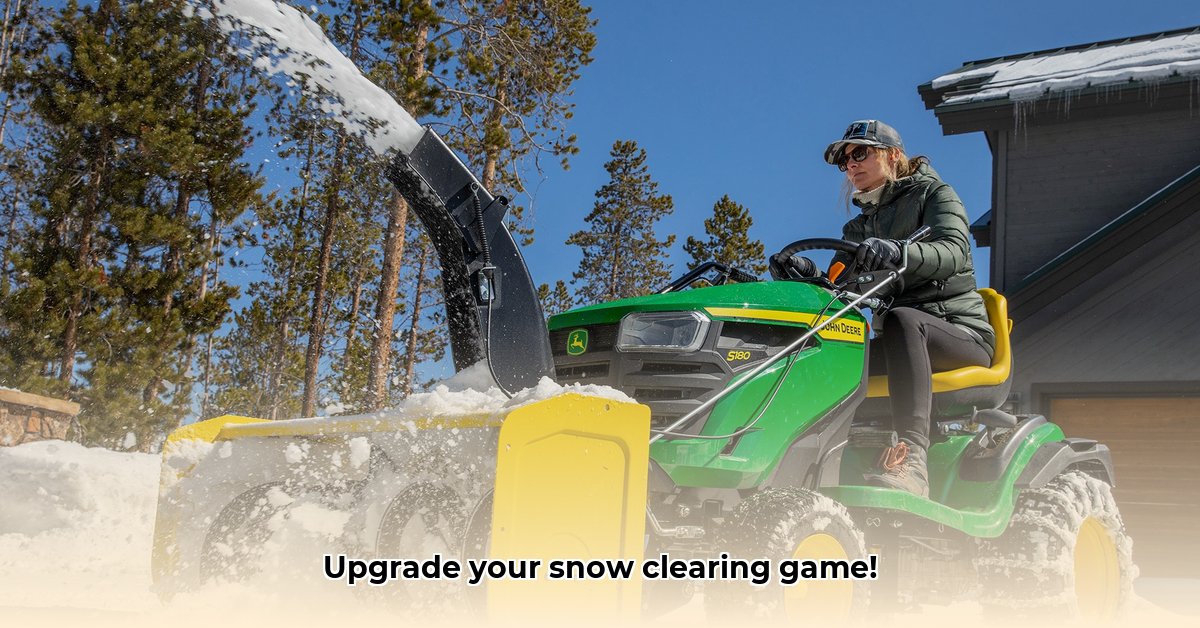
Getting snow off your driveway shouldn't be a back-breaking chore. Lawn tractor snow blower attachments transform this task from a grueling workout into a relatively quick and easy job. But with various options available, choosing the right one can feel overwhelming. This guide simplifies the process, helping you find the perfect snow-clearing partner for your lawn tractor. For more detailed information, check out this helpful resource.
Sizing Up Your Needs: Choosing the Right Attachment
Before browsing models, consider these key factors:
Driveway Dimensions: A small driveway needs a different attachment than a long, winding one. Smaller units suffice for smaller areas, while larger driveways require more powerful attachments. Do you have a long, curvy driveway or a simple rectangular one? This will drastically change the capabilities you need.
Snowfall Expectations: Do you get light dustings, moderate accumulation, or significant blizzards? The amount of snow directly impacts the power and capacity needed. Light, fluffy snow is easier to handle than heavy, wet snow. How much snow do you typically get per storm?
Tractor Horsepower: Your tractor must have enough power for the attachment. Using an attachment too powerful for your tractor can damage your machine. Conversely, an underpowered machine struggles with even modest snowfall. Check your tractor's owner's manual for its horsepower rating – this is crucial. Ignoring this risks damage and frustration.
Types of Snow Blower Attachments: The Three Main Contenders
Three main types of snow blower attachments exist: single-stage, two-stage, and three-stage. Each is designed for different snow conditions and driveway sizes.
Single-Stage Snow Blowers: These are like power brooms. They use a single auger to scrape up and throw the snow. They're simple, relatively inexpensive, and ideal for light, powdery snow on smaller driveways. However, they struggle with heavier, wetter snow. Are your winters typically mild?
Two-Stage Snow Blowers: These are workhorses. They use a powerful auger to gather snow and a separate impeller to throw it. This two-step process handles moderate snowfall and larger areas more easily than single-stage models. Do you need something more versatile?
Three-Stage Snow Blowers: These are heavy hitters, built for the toughest conditions. They have a powerful auger, an impeller, and a second impeller to accelerate and propel the snow further. Ideal for large driveways and heavy, wet, or packed snow, but usually the most expensive. Will you face heavy, wet snow frequently?
Matching the Attachment to Your Tractor: Power Considerations
Choosing a compatible attachment is critical. Using an attachment requiring more power than your tractor provides will likely lead to damage.
Here's a general guideline for horsepower requirements (always cross-reference with manufacturer recommendations):
| Attachment Type | Estimated Horsepower Requirement |
|---|---|
| Single-Stage | 10-15 HP |
| Two-Stage | 15-20 HP |
| Three-Stage | 20+ HP |
Remember, these are estimates; always consult both your tractor's and snow blower's manuals for precise specifications.
Making the Right Choice: A Decision-Making Process
This decision tree helps navigate the process:
Assess Your Snowfall: Light, fluffy snow? A single-stage might suffice. Moderate accumulation? Consider two-stage. Heavy, wet snow? You'll likely need a three-stage blower.
Consider Driveway Size: A small driveway can be handled by a single or two-stage model. Larger driveways benefit from a two- or three-stage system.
Set a Budget: Single-stage models are generally the most affordable, while three-stage blowers represent a significant investment.
Factor in Maintenance: All snow blowers require maintenance. Consider your willingness to dedicate time and effort.
Installation and Maintenance: A Step-by-Step Guide
Always consult your snow blower's and lawn tractor's instructions. Improper installation can lead to damage or injury.
Installation (General Steps):
Engage the PTO (Power Take-Off): Engage your tractor's PTO before connecting the attachment.
Align and Attach: Carefully align the snow blower with its mounting points on your tractor. Follow the manufacturer's instructions.
Secure Connections: Ensure all connections are securely fastened. Loose connections are dangerous and can lead to malfunctions.
Adjust the Chute: Adjust the discharge chute to direct the snow away from buildings, vehicles, and people.
Maintenance (General Steps):
Regular Inspection: Inspect your snow blower frequently for wear and tear, especially on the auger and impeller. Replace damaged components promptly.
Keep it Clean: Remove snow and ice after each use to prevent damage and buildup. Clean debris from the chute.
Lubrication: Regularly lubricate moving parts according to the manufacturer's instructions.
Storage: Store your attachment in a dry, protected place during the off-season.
Safety First: Operating Your Snow Blower Responsibly
Safety is paramount.
Protective Gear: Always wear gloves, eye protection, and sturdy footwear. Consider hearing protection.
Clear the Area: Remove obstacles before operating the snow blower.
Keep Kids Away: Never operate a snow blower near children or pets.
Be Aware of Your Surroundings: Pay close attention to your surroundings.
Never Reach into the Blower While it is Running: This is incredibly dangerous. Always turn off and disconnect the power before performing maintenance.
Comparing Popular Models: A Future Update
A detailed comparative table summarizing key features and specifications of popular models will be added in a future update. This will aid in making informed decisions.
Choosing the right snow blower attachment is an important investment. By carefully considering your needs, you can select the perfect tool to simplify snow removal.